Discover other projects and activities
Coming soon
Clinical Psychology Supervision Program
Professional supervision in clinical psychology is a professional activity conducted as a professional training internship, lasting at least 1 year, carried out by a practicing psychologist with a private practice license under the supervision of a contracted principal or specialist psychologist certified by the Romanian College of Psychologists, with the purpose of training and developing professional competencies adapted to clinical psychology.
The status of a clinical psychology supervisor grants the principal/specialist psychologist the right to supervise the activities of practicing psychologists under supervision, in line with the competencies they need to develop. This status is obtained through a standard application addressed to the Clinical Committee of the Romanian College of Psychologists, after obtaining a doctorate in psychology by the principal or specialist psychologist, and/or after a minimum of three years of professional experience as a principal psychologist, along with recommendations from two principal psychologists who certify the training skills of the principal/specialist psychologist.
This clinical supervision program consists of 18 comprehensive modules, as follows: (1) Introduction to the profession of clinical psychologist, (2) Procedures and reports, (3) Depression, (4) Anxiety, (5) Personality disorders, (6) Degenerative cognitive disorders, (7) Attention, (8) Intelligence, (9) Diagnosing children/adolescents, (10) Diagnosing disorders in children, (11) Diagnosing disorders in adolescents, (12) Projective tests, (13) Pre/postoperative assessments, (14) Career counseling, (15) Creating a psychological profile, (16 & 17) Case discussions, (18) Final report (plus 3 additional reports to be submitted).

Course on Toxic Relationships
in collaboration with George Siminic
How to recognize that you are in a toxic relationship and how to get out of it?
The term "toxic relationship" was coined by Dr. Liliam Glass in her book in 1995. "Toxic People" defines a toxic relationship as "any relationship between people that doesn't support each other, where there is conflict and one seeks to undermine the other, where there is competition, lack of respect, and lack of cohesion."
While every relationship has its ups and downs, a toxic relationship is consistently unpleasant and draining for the people involved, to the point where the negative moments outweigh the positive ones.
Toxic relationships are mentally, emotionally, and even physically harmful to one or both participants.
These relationships don't necessarily have to be romantic; friendships, family relationships, and professional relationships can all be toxic as well.
People who undermine or cause harm to a partner - intentionally or unintentionally - often have a reason for their behavior, even if it is subconscious. Perhaps they were in a toxic relationship before... Maybe they didn't have the most supportive and loving upbringing... They might have been bullied in school... They could be suffering from an undiagnosed mental health disorder such as depression, anxiety, or bipolar disorder... Or they might have an eating disorder... Or any form of trauma...
Toxicity in a relationship can take various forms, including emotional or verbal abuse. However, it's not always possible to draw a clear line between toxicity and abuse. Toxic relationships are unhealthy but not necessarily abusive. Sometimes toxic behavior is not intentional - although, of course, that doesn't make it any less painful.
Also, note that many unhealthy relationships involve toxic behavior from both partners, even when neither of them is behaving abusively.


Community Connection
(DUDEȘTII NOI 2023)
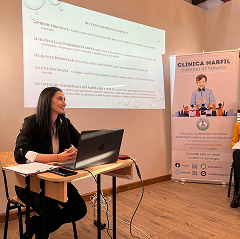
This program was created to help parents navigate the challenges and joys of raising children. Being a parent is a wonderful journey, but it can also be filled with challenges. Whether you are a first-time parent or already have experience with children, each new stage of their growth can bring questions and uncertainties. In this project, we provide a wide range of resources and tools to help you feel more confident and prepared to face any challenges that arise along the way.
Within this program, we shared useful information about child development and ways to promote children's mental and emotional well-being. Topics such as managing difficult behaviors, communicating with children, building healthy relationships with parents and other adults, understanding children's emotional needs, and much more were addressed.
The themes we covered included:
Parenting: the process of nurturing and caring for children, including activities and decisions that influence their emotional, social, and behavioral development.
The need for healthy boundaries in children: healthy boundaries, the anxiety that can arise in the absence of boundaries, insecurity, the line between right and wrong.
Bullying: occurs when a person or group intentionally and repeatedly behaves in a way that makes someone feel hurt, scared, or embarrassed.
Performance-related anxiety: the three types of performance anxiety were presented: cognitive, social, and motor.
Program developed in collaboration with: George Siminic (psychologist/psychotherapist) and Gabi Bădăluță (psychologist/psychotherapist) and Marfil Clinic.
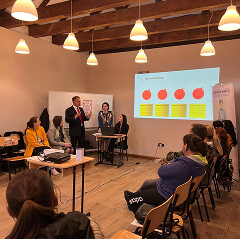
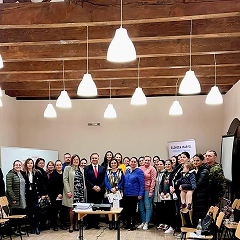
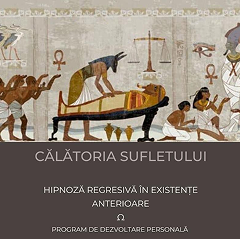
The Journey of the Soul
Regression Hypnosis to Past Lives
Together with Junona Prisăcean, clinical psychologist and transpersonal psychotherapist, and Ioana Oneț, clinical psychologist and integrative psychotherapist, we had the great pleasure of conducting our following therapy program:
The Journey of the Soul
Regression Hypnosis to Past Lives
Personal Development Program
The journey of the soul is a carousel of events, experiences, and emotions that accumulate into a unique imprint for each of us. It can sometimes be difficult to understand why our path in this journey has veered off from a path we thought was secure and has a destination we lost sight of. This program comes as a hopeful companion and support in understanding and rediscovering our personal path. Together, we have discovered individuals, places, eras, and situations that repeat in our lives to be teachers in our own growth. We will rediscover, understand, and integrate all of these, so that our own journey can continue with a newfound awareness like never before!
The structure of the program was as follows:
*OBJECTIVE: Identifying dysfunctional patterns that have emerged in past lives and replacing them with functional psychological models.
*WORKING METHODS: Regression hypnosis, relaxation techniques, projective techniques, cognitive, emotional, and behavioral reconstruction.
*DURATION: 5 group sessions (6-8 people) of 4 hours each, with a two-week interval between sessions.